
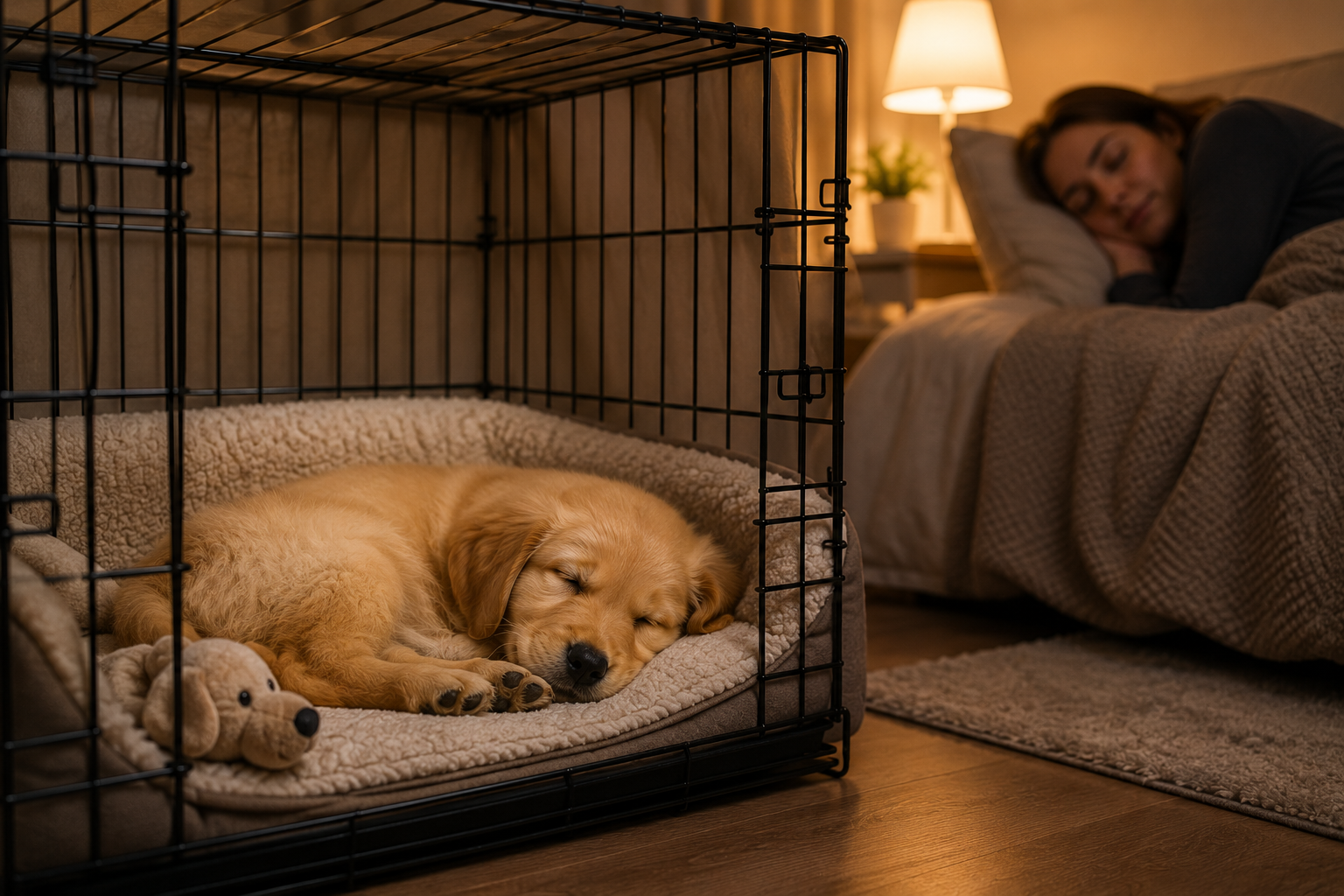
Build a short, calm wind-down routine before bed (a final toilet trip, a quiet ten minutes, no vigorous play in the last half hour), and put the crate or pen next to your bed for at least the first week or two so your puppy isn't sleeping alone in an unfamiliar room. Time the last meal so it's neither too close to bedtime, which risks a night-time toilet need, nor too early, which risks a hungry wake-up. Most puppies settle faster than owners expect once the routine is consistent, and most sleep through the night somewhere around sixteen weeks of age, though this varies by puppy. Crying in the first few nights is normal grief and adjustment, not manipulation, and it usually fades within one to two weeks.
This page covers the routine itself, what to actually do when your puppy cries at 2am, and how to tell ordinary first-week unsettledness from something that needs a different approach.
Building the routine
Keep the last hour calm. A gentle walk around the garden or a quiet sniff around the house works better than a wound-up play session, since an overstimulated puppy takes longer to settle than a tired-but-calm one.
Time the last meal deliberately. Too close to bedtime and your puppy may need a toilet trip within the hour. Too early and hunger can trigger an early wake-up. A meal roughly two to three hours before bed, adjusted to your own puppy's digestion, tends to work well.
Always toilet last thing before bed, even if your puppy just went twenty minutes earlier. It costs two minutes and prevents an avoidable night wake-up.
Make the sleeping space itself a good place, not a punishment. Feed meals there sometimes, put a safe chew in it, and never send your puppy to the crate as a consequence. Our guide to crate training a puppy step by step covers building that association from the start.
Sleep near your puppy for the first week or two. A crate or pen next to your bed, rather than in another room, reassures a puppy that has just lost its mother, littermates, and every familiar smell it has ever known. You can move the crate gradually toward its permanent location over the following weeks as your puppy settles in.
What to actually do when your puppy cries at night
Don't ignore it outright, and don't rush in dramatically either. A puppy that has just been separated from its litter is not testing you; it's genuinely distressed, and letting it cry it out unattended is common advice that teaches the wrong lesson: that being alone and upset gets no response at all. That's the same emotional groundwork that underlies separation anxiety later, which is one reason we don't recommend it here.
Check whether it's a toilet need first. A puppy this young often can't hold it through a full night, especially early on. A calm, boring toilet trip (dim light, no play, straight back to the crate afterward) rules this out without turning 2am into playtime.
If it's settling-in distress rather than a toilet need, a calm hand near the crate, a low voice, or briefly sitting nearby is usually enough. The goal is reassurance without turning the middle of the night into an exciting, rewarding event that teaches your puppy that crying reliably produces attention and play.
Keep the response boring on purpose. Lights low, voice quiet, minimal interaction beyond what's needed to settle your puppy back down. An exciting middle-of-the-night response, even a well-meaning one, can accidentally reinforce waking up and crying as a way to get you.
The part sleep guides usually skip: telling normal from concerning
Most puppy sleep advice stops at "expect some crying the first few nights." What it often doesn't say is how to tell that apart from something that needs a different approach.
Ordinary first-week unsettledness looks like: crying that responds to your calm presence, that gradually shortens night by night, and that happens alongside otherwise normal eating, play, and toileting during the day. This is grief and adjustment, and it resolves with consistency and time.
A pattern worth watching more closely looks like: distress that isn't easing after one to two weeks, panic that escalates rather than calms with your presence, or crying that's tied specifically to being left completely alone (rather than just being in a different room) even briefly during the day. That pattern points toward the beginnings of separation-related distress rather than ordinary settling-in, and it responds better to a deliberate, gradual alone-time plan than to more reassurance at night alone. Our guide to dog separation anxiety covers building tolerance to being alone in the daytime, which is the piece that actually addresses this pattern.
Restlessness with no clear trigger, especially if it's new, in an older puppy that was previously sleeping fine, is worth mentioning to your veterinarian, since pain, itching, or a digestive issue can all disrupt sleep and look behavioral at first glance.
A realistic timeline
Expect real crying in the first few nights, a gradual improvement over the first one to two weeks, and something close to sleeping through the night, waking only for a genuine toilet need, by somewhere around sixteen weeks old for many puppies. Smaller puppies with smaller bladders sometimes take a little longer. If your puppy is still waking every single night with no improvement past that point, or the waking is paired with obvious distress rather than a quiet toilet request, that's worth raising with your veterinarian or a reward-based trainer rather than assuming more time alone will fix it.
If nighttime settling is one piece of a bigger first-month adjustment, our first 30 days plan for a new puppy covers how sleep, potty training, and socialization fit together in that early period. If restless movement or pacing continues well past the first few weeks and doesn't look like ordinary settling, our guide to dog pacing at night covers that pattern for older dogs and puppies alike.
Frequently asked questions
Should I let my puppy cry it out at night?
We don't recommend it. A puppy crying in its first nights is genuinely distressed, not manipulating you, and ignoring it entirely can teach a puppy that being alone and upset produces no response, which feeds into separation-related problems later. A calm, boring response that doesn't turn into playtime settles most puppies without that risk.
Where should my puppy sleep the first few nights?
Close to you, in a crate or pen next to your bed, rather than alone in another room. This reassures a puppy that has just lost every familiar smell and routine it had. You can gradually move the crate to its permanent spot over the following weeks.
When do puppies start sleeping through the night?
Many puppies get there by around sixteen weeks old, though this varies by individual puppy and by bladder control specifically. Consistent routine and toileting last thing before bed speed this up more than almost anything else.
How do I know if it's a toilet need or just settling-in distress?
Try a calm, low-key toilet trip first: dim light, no play, straight back to bed. If your puppy settles right after, it was likely a genuine need. If the crying continues or restarts quickly with no elimination, it's more likely adjustment distress, which calls for calm reassurance rather than more toilet trips.
Is crying at night the same as separation anxiety?
Not usually, especially in the first week or two. Ordinary settling-in distress fades with time and consistency. Distress that isn't easing after a couple of weeks, or that shows up specifically when your puppy is left completely alone even briefly in the daytime, points toward separation-related anxiety, which needs a different, more gradual daytime plan.
This article is general owner guidance drawn from veterinary and behavior practice resources on puppy sleep and adjustment, verified at the time of writing. It is not veterinary advice. Sudden sleep disruption in a previously settled puppy, or distress that isn't easing with consistency, is worth discussing with your veterinarian or a reward-based trainer.