Dog Dental Basics: Why Brushing Is a Training Project First
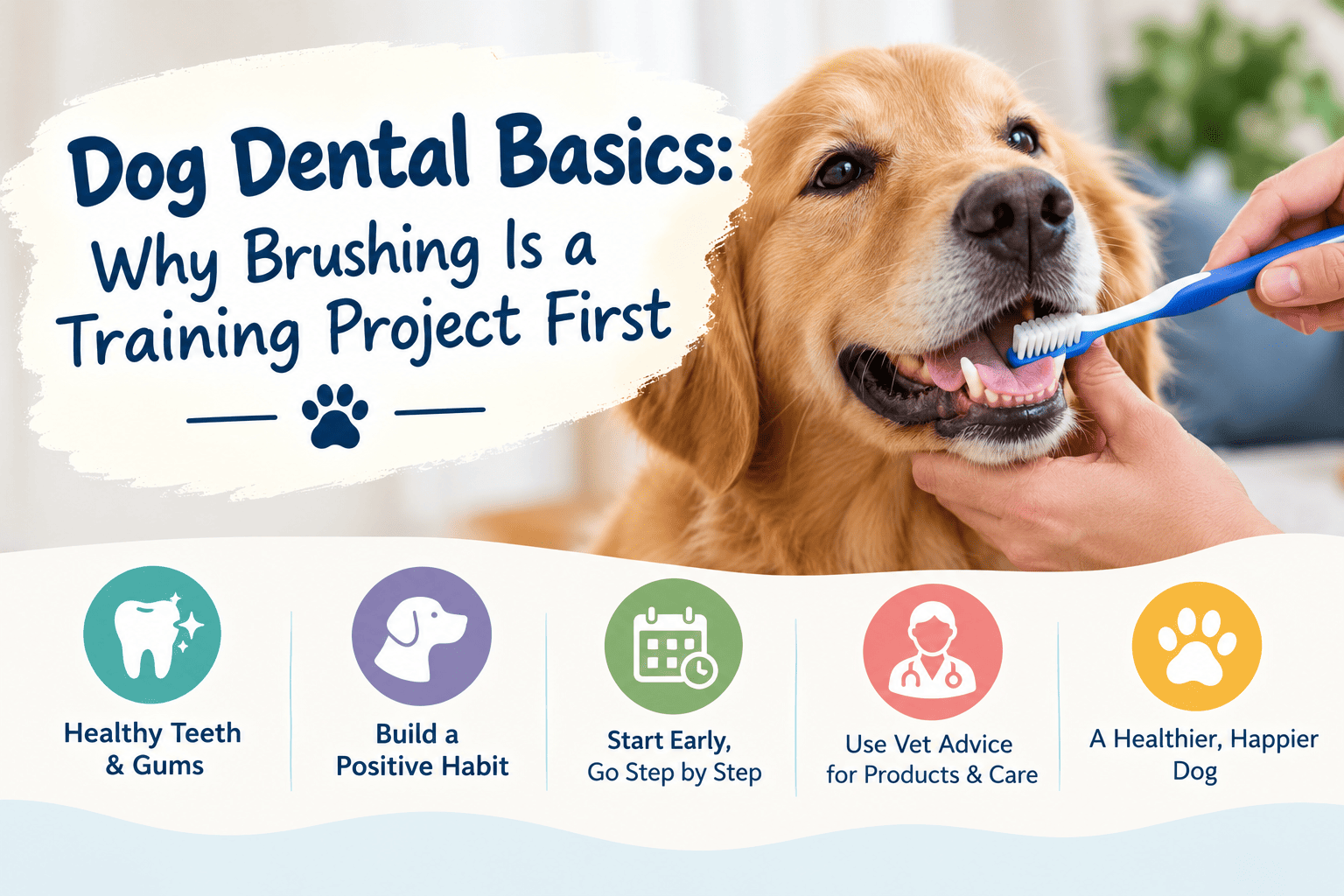
Periodontal disease is described as the most common clinical condition in adult pets and as almost entirely preventable. The obstacle is not the brush, it is the dog.

Periodontal disease is described as the most common clinical condition in adult pets and as almost entirely preventable. The obstacle is not the brush, it is the dog.

A non-diagnostic overview of what routine care covers, what changes are worth acting on, and the emergency signs that mean call now rather than wait.

Some of these are folklore. One of them has a veterinary body’s published position against it. Here is which is which, and what we could not source either way.

Dog trainer is not a regulated title. Here is what each certification actually certifies, and the six questions that tell you what a class is really like.

Every puppy schedule you find is somebody else’s day with times on it. Here is how to build one around your day and the four things it has to contain.

Most grooming problems in adult dogs start as a puppy that was held still. Here is the reward-based way to introduce brushing, nails and bathing.

The two-window version of fear periods is repeated everywhere with dates attached. Here is what is actually documented, and what to do while it is happening.

A general age range for teething, the signs worth watching, and the three findings in a puppy’s mouth that are a vet appointment rather than a phase.

The five-minutes-per-month rule is everywhere. We went looking for the evidence and found blogs quoting blogs. Here is what to do instead of following a number.

Chewing, shredding and digging from under-stimulation look identical to three other causes with different fixes. Here is how to tell them apart first.