
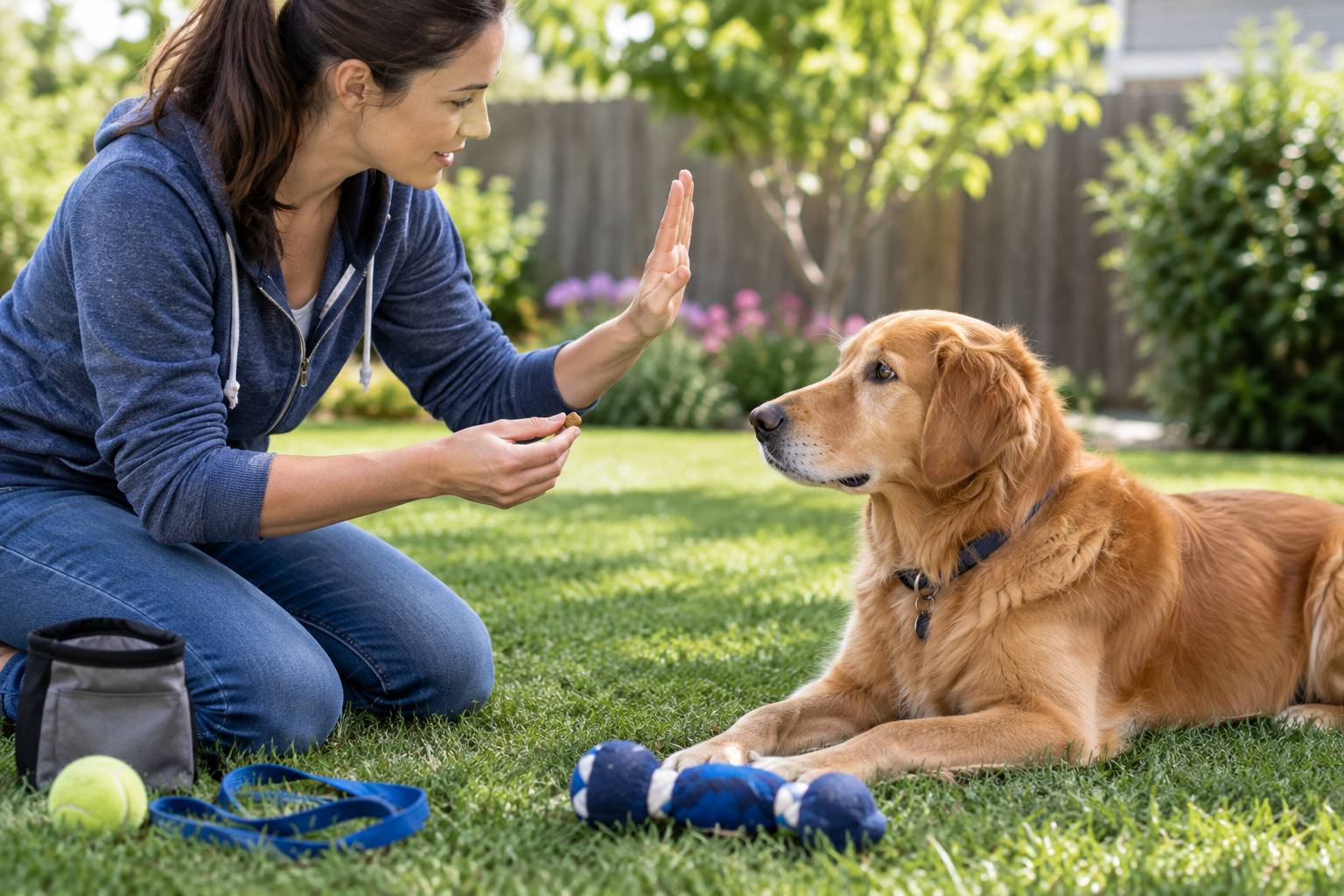
"Leave it" means do not touch that. "Drop it" means let go of what is already in your mouth. You teach both the same way: make giving up the item pay better than keeping it. For leave it, cover a treat in your hand, wait until your dog stops trying to get it, then reward with a different treat from your other hand. For drop it, offer a trade: a treat or a second toy in exchange for the item, then often give the first item back. Never chase, grab or pry, because that teaches your dog to run or guard.
If your dog has already swallowed something that could be harmful, stop here and call your veterinarian or the nearest emergency clinic. In the United States, ASPCA Animal Poison Control and the Pet Poison Helpline can also advise; both charge a fee for a consultation. Do not give your dog anything by mouth unless a veterinarian tells you to, and take the packaging or a photo of it with you. This page is about training, not first aid.
Leave it vs drop it: two different jobs
These cues solve different problems, so it helps to teach them separately.
| Leave it | Drop it | |
|---|---|---|
| When you use it | Before your dog touches something | After your dog already has it |
| What your dog does | Looks away or moves away from the item | Opens their mouth and releases it |
| Everyday examples | Food dropped in the kitchen, something on the sidewalk, a child's toy on the floor | A sock, a stick, a toy you need back |
| What makes it work | Ignoring the item earns something better | Letting go earns a trade, and often the item back |
Leave it is the more powerful of the two for safety, because it stops the problem before anything goes in your dog's mouth. Drop it is your backup for when you are too late.
How to teach leave it
- Start with a closed hand. Put a treat in your fist and hold it near your dog's nose. Your dog will sniff, lick and paw. Say nothing and keep your hand still.
- Wait for a break. The moment your dog pulls their nose away, even for a second, say "yes" and give a different treat from your other hand. Never give the treat they were trying to get.
- Repeat until your dog backs off quickly. Then add the cue: say "leave it" once as you present your closed hand.
- Move to an open hand. Show the treat on your open palm. If your dog goes for it, close your hand. When they hold back, mark and reward from the other hand.
- Move to the floor. Place a treat on the floor and be ready to cover it with your hand or foot. Reward your dog for looking at you instead.
- Add movement. Walk your dog on leash past a treat or toy on the floor, keeping the leash loose and staying far enough away that your dog can succeed. Reward every time they look away or look at you.
Say the cue once. If your dog goes back for the item, calmly cover it and wait. Repeating "leave it, leave it, LEAVE IT" teaches your dog that the first few don't count.
How to teach drop it
Drop it is built on trades. Your dog learns that letting go is a good deal, not a loss.
- Start with a toy your dog likes, but not their very favorite. Let them hold it.
- Offer a trade. Hold a tasty treat right in front of their nose. Most dogs open their mouth to take it. As the toy falls, say "yes" and give the treat.
- Give the toy back. This is the part that makes drop it reliable. Your dog learns that dropping does not mean losing the toy for good.
- Add the cue. Once your dog lets go easily for the trade, say "drop it" just before you show the treat.
- Try the two-toy game. Play with one toy, then make a second, identical toy come alive by moving it around. As your dog drops the first to chase the second, say "drop it" and reward with play.
- Practice when it doesn't matter, many times, with items you are happy to give back. Then, when it does matter, your dog already knows the game.
For items your dog truly must not keep, trade for something better and use the item's disappearance as a quiet moment, not a fight.
Why chasing and prying backfire
It is very natural to grab at an item or chase a dog who has picked up something they should not have. It is also the fastest way to make drop it harder.
Chasing turns it into a game. Many dogs love being chased, so running after a dog with a sock teaches them that grabbing socks starts a fun game.
Prying teaches that hands mean loss. A dog who has things pulled from their mouth often learns to swallow items quickly, run away with them, or stiffen and growl when a hand comes near. That is how a training moment can turn into resource guarding. Our guide on dog resource guarding explains how that pattern develops and how to address it safely.
Punishment adds fear. The American Veterinary Society of Animal Behavior's guidance on reward-based training methods (read September 11, 2026) recommends reward-based methods only and lists fear, anxiety, stress and aggression among the documented risks of aversive ones. A dog who is scared of losing things is more likely to protect them.
AVSAB's position statement on dominance theory (read September 11, 2026) also notes that most unwanted behavior comes from accidental rewards, not from a dog competing for rank. A dog who grabs things is not challenging you. They just found something interesting and have learned it gets attention.
Child and bite safety
Children should never try to take anything from a dog's mouth, and they should never reach into a food bowl or near a chew the dog is holding. If a child finds the dog with something, the rule is: step away and call an adult.
The American Veterinary Medical Association's dog bite prevention guidance (April 2026 release, read September 11, 2026) says children should never disturb a dog that is eating, sleeping or caring for puppies, and should never be left unsupervised with dogs, even familiar family pets. A dog holding a prized item belongs in the same category.
If your dog stiffens, freezes, growls, snaps or bites when you approach an item, stop training drop it for that item. Do not test it, and do not try to "show them who is boss." Manage the situation by keeping those items out of reach, and get help. Start with your veterinarian, because pain and illness can make a dog less tolerant of being approached, then work with a board-certified veterinary behaviorist or a certified trainer who uses reward-based methods. The American College of Veterinary Behaviorists (read September 11, 2026) keeps a searchable directory of its diplomates, who use the initials DACVB.
If your dog suddenly starts guarding things they never guarded before, see your vet first. The Merck Veterinary Manual's owner guide to diagnosing behavior problems in dogs (read September 11, 2026) stresses ruling out medical causes, including pain, before treating a behavior problem.
Using leave it and drop it in real life
Once your dog knows the cues at home, practice where you will need them.
On walks, leave it is most useful before your dog reaches something on the ground. Watch ahead, say the cue early, and reward generously when your dog looks back at you. If your dog is drawn to eating things they find outdoors, our guide on how to stop a dog eating poop covers the medical checks and management that belong alongside training.
In the kitchen, leave it helps with dropped food, and it pairs well with teaching your dog to keep four paws off the counters. See our plan for stopping counter surfing.
Keep the rewards flowing. A cue that only ever costs your dog something will fade. Keep paying for leave it and drop it, and keep giving items back when it is safe to do so. The positive reinforcement dog training guide explains why intermittent practice with good rewards keeps a cue strong.
Manage what you cannot yet train. Until the cues are reliable, pick up items your dog likes to grab, keep laundry and children's toys off the floor, and use a leash on walks in places where your dog tends to scavenge.
Frequently asked questions
Should I teach leave it or drop it first?
Many trainers start with leave it, because it prevents the problem before anything is in your dog's mouth. But you can teach both in the same week, in separate short sessions. They use the same idea: giving up the item pays better than keeping it.
My dog swallows things quickly when I say drop it. What should I do?
That often means your dog expects to lose the item. Go back to easy trades with low-value items, give the item back often, and avoid chasing. If your dog has swallowed something that might be harmful, call your veterinarian or a pet poison line straight away.
Is it OK to reach in and take something out of my dog's mouth?
Only a veterinarian or a trained professional should handle a genuine emergency like that. For everyday items, trade instead. Prying or grabbing risks a bite and teaches your dog to guard or swallow things.
What if my dog growls when I ask for an item?
Stop, step back and do not punish the growl, which is a warning. Keep those items out of reach, have your veterinarian check for pain or illness, and then work with a board-certified veterinary behaviorist or a certified reward-based trainer.
The short version
Leave it stops your dog before they touch something; drop it gets it back after. Teach both with trades and generous rewards, give items back often, and never chase or pry. Keep children away from dogs who are holding things, and treat any growl, freeze or snap as a reason to get help, not a reason to push harder.