
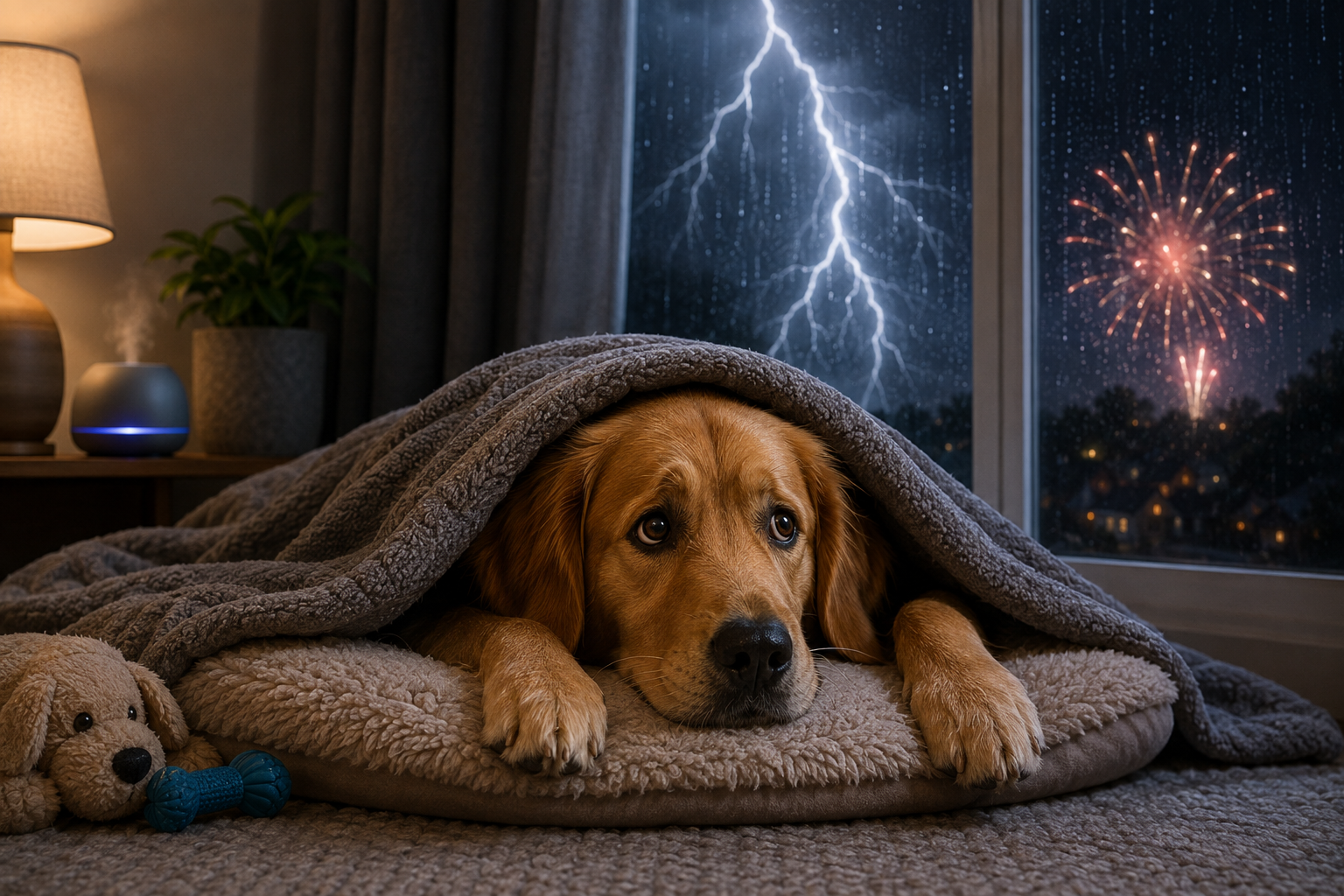
During an active storm or fireworks, focus on comfort, not training: bring your dog to an interior room or a den-like space they already like, mask the noise with white noise or the TV, close blinds to hide lightning flashes, and stay calm yourself without over-fussing, which can reinforce panic in some dogs. Do not try to desensitize your dog mid-storm; that only teaches them the sound predicts more stress. The real fix is a desensitization plan built during calm weeks, using recorded storm or firework sounds at a volume too low to trigger fear, paired with rewards. If your dog injures itself trying to escape, drools or paces for hours, or the fear is worsening, talk to your veterinarian about medication and a certified behaviorist.
Most advice on this topic mixes together what to do during tonight's storm with the months-long project of actually changing the fear, and an owner standing in a hallway with a shaking dog does not have the bandwidth to sort that out. Split it into two modes.
Tonight: what to do during the storm or fireworks
- Go to a safe, interior space. A windowless bathroom, closet, or an existing den-like spot your dog already retreats to on its own. Let your dog choose it if it has a preference; don't force a new location during an active storm.
- Mask the sound. A TV, white noise machine, or fan turned up covers some of the sharper cracks and rumbles.
- Block the visual trigger too. Lightning flashes through a window can be as startling as the thunder itself. Closed blinds or curtains help.
- Stay calm yourself. Sit with your dog if that helps them, but avoid frantic reassurance ("it's okay, it's okay, it's okay") delivered in an anxious tone, which some dogs read as confirmation that something is wrong. Quiet, steady presence works better than a big fuss.
- Offer a long-lasting chew or stuffed toy, but don't be surprised if a genuinely frightened dog won't eat. That's normal during real panic and not a sign you're doing something wrong.
- Let your dog choose to hide if it wants to. A dog under a bed or in a closet is doing its own version of the safe-space instinct. Don't drag it out to "face its fear."
Do not do this mid-storm
Don't start a training exercise during a live thunderstorm. Playing recorded thunder sounds louder to "get the dog used to it faster," or attempting desensitization exercises in the middle of a real, uncontrolled event, does not build tolerance. It teaches your dog that the sounds you control are just as unpredictable and threatening as the real thing, which can make the fear worse rather than better. Comfort now, train later, on your schedule, not the weather's.
Before next season: building a real desensitization plan
This is the part that can actually reduce the fear over time, and it has to be done when your dog is calm, not during a storm.
- Get a recording of thunder or fireworks (widely available) and play it at a volume so low your dog barely notices, while doing something pleasant, a meal, a favorite game, calm petting.
- Only increase the volume gradually, and only when your dog stays relaxed at the current level. If your dog shows any stress signs, ears back, panting, refusing food, turn it down and go back to the last comfortable level.
- Keep sessions short, a few minutes at a time, several times over weeks, well before the season when storms or fireworks are likely. Rushing this defeats the purpose.
- Build the association slowly: quiet sound plus something good, repeated consistently, so the sound itself starts predicting something pleasant rather than nothing at all.
There's no fixed number of sessions or weeks that guarantees success. Progress depends on the individual dog and how consistently the plan is followed, and some dogs improve more than others.
Tools that genuinely help
- Anxiety wraps or compression garments, which apply gentle, constant pressure some dogs find calming, similar in concept to swaddling.
- Pheromone diffusers or collars, which release a synthetic version of a calming maternal pheromone and have shown benefit for some dogs' anxiety in general.
- A pre-arranged safe space your dog already associates with calm, set up before the season starts, not improvised during the first storm.
None of these are a substitute for the desensitization work above in a genuinely phobic dog, but they can meaningfully reduce day-to-day stress and support the training.
When medication belongs in the plan
For dogs with a severe, established fear, situational anti-anxiety medication, prescribed and timed by a veterinarian well ahead of an expected storm or fireworks event, can be an appropriate part of the plan alongside behavioral work, not instead of it. This is a conversation to have with your vet in advance of the season, not during an active event, since most of these medications need to be given before the anxiety starts to be effective. Dosing and medication choice are entirely a veterinary decision; this article does not make one.
How severe is this?
Mild noise sensitivity, some pacing, panting, or seeking you out during a storm, generally responds well to the comfort-plus-desensitization approach above. Treat it as more serious, and involve your veterinarian promptly, if you see destructive attempts to escape (scratching at doors, breaking through screens), injury from trying to get out (broken nails, bleeding, damaged teeth from chewing at a crate or door), drooling or panting that doesn't stop for hours, or hiding and shaking well after the storm has passed. These are signs of a genuine noise phobia, and a veterinarian, sometimes alongside a certified veterinary behaviorist, is the right team to build a fuller plan with medication and structured behavior work together.
What not to do
Don't punish fear. Scolding a dog for shaking, hiding, or panting during a storm adds stress on top of fear it cannot control, and does not reduce the fear itself.
Don't force your dog out of its chosen hiding spot to "face the fear." That is closer to flooding than desensitization and tends to backfire.
Don't skip the vet conversation if the fear is severe, hoping it will resolve on its own. Untreated noise phobia in dogs generally does not improve without intervention and can worsen over successive storm seasons.
For a related pattern of anxiety this site covers in depth, see our guide to dog separation anxiety, which shares the same "describe the pattern, build a plan, know when to call a professional" structure. If howling shows up during storms specifically, our guide on dog howling when left alone covers vocalization tied to distress more broadly. The redirect-and-reward mechanics behind the desensitization steps above come from our positive reinforcement dog training guide.
Frequently asked questions
Will my dog grow out of a fear of thunder?
Usually not on its own, and noise phobias often worsen with age and repeated exposure rather than fading. Building a desensitization plan during calm weeks is the more reliable path than waiting it out.
Should I crate my dog during a thunderstorm?
Only if your dog already sees the crate as a safe, comfortable space. Forcing a dog that finds a crate stressful into one during a storm adds a second stressor. A safe space is wherever your dog already goes to feel secure, crate or otherwise.
Can I use CBD or over-the-counter calming products?
Talk to your veterinarian before giving any product, over-the-counter or otherwise, since effectiveness and safety vary and your vet can advise on what's appropriate for your individual dog alongside anything else it takes.
Is it true that comforting a scared dog makes the fear worse?
Calm, steady comfort does not create or worsen a genuine fear. What can backfire is frantic, anxious reassurance from you, which some dogs read as confirmation that something is actually wrong. Comfort your dog the way you naturally would; the concern is about your tone and energy, not whether you comfort them at all.
This article is general owner guidance drawn from Cornell University College of Veterinary Medicine, VCA Animal Hospitals, and Best Friends Animal Society. It is not veterinary advice. If your dog shows signs of severe noise phobia, please talk to your veterinarian about a full plan, including medication where appropriate.